

Colchester Vermont Weather: A Complete Four-Season Guide
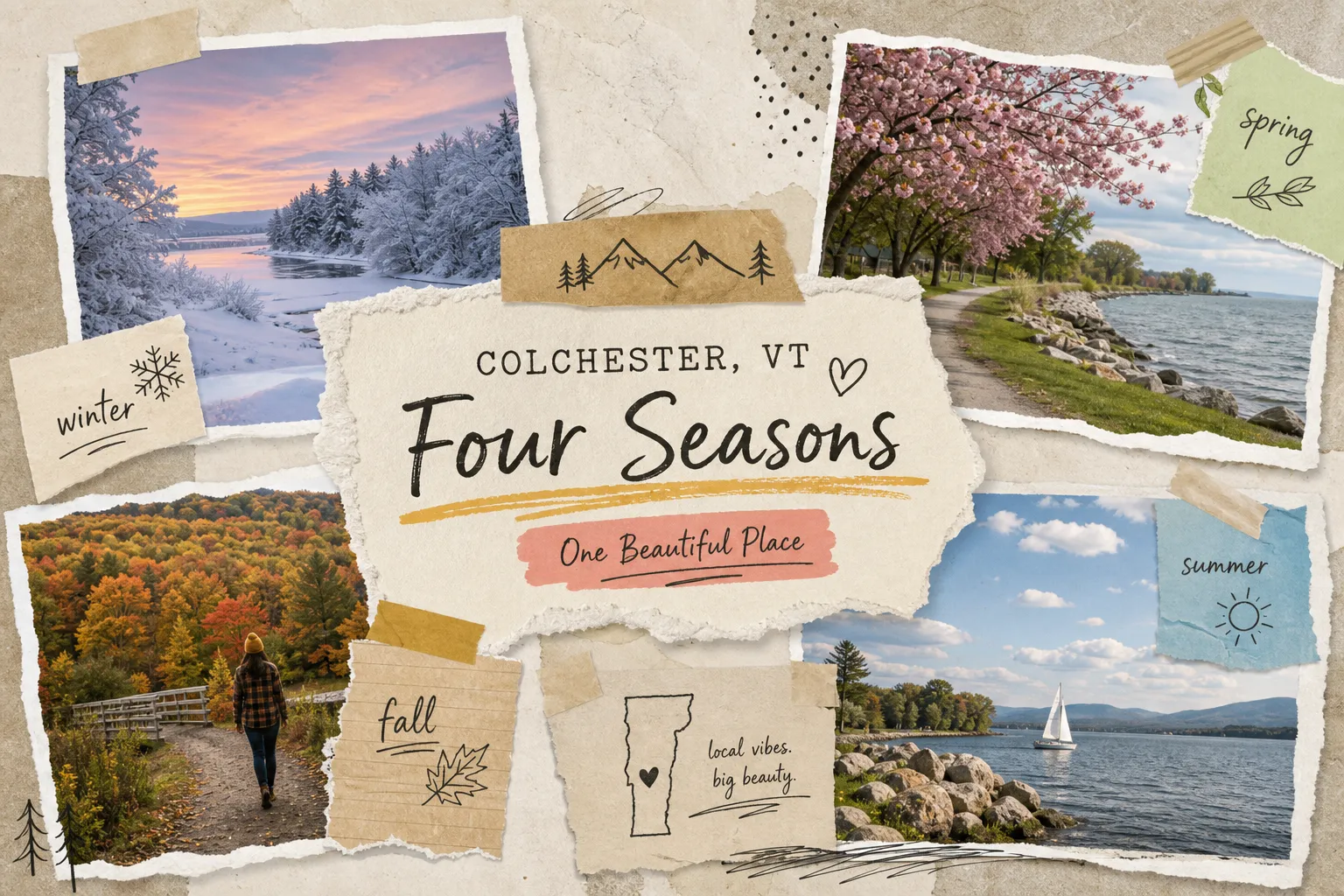
Picture yourself standing in a Colchester backyard on a Wednesday morning in mid-October. The maples along the fence line are burning red and gold. Your coffee steams. And your phone just pinged with a frost warning for the coming weekend. That combination, gorgeous and unforgiving at the same time, is Colchester, Vermont weather in a single frame.
Life in the 05446 doesn't hand you one season. It hands you four distinct ones, each demanding something different from your wardrobe, your vehicle, your home, and your daily routine. This guide walks through every season honestly, covering what temperatures actually look like month to month, how precipitation patterns shift, and what daily life feels like on the ground. If you're planning a move to Colchester, understanding the climate isn't a side note. It's step one.
Colchester Vermont Weather in Winter: What to Actually Expect
People moving from the mid-Atlantic or the South often assume that being near Lake Champlain softens Vermont winters in a meaningful way. The lake does offer some moderating effect, but it's easy to overestimate. Colchester winters are cold, snowy, and sustained. Setting honest expectations upfront saves a lot of surprise in February.
Snowfall totals and temperature ranges
Colchester averages around 72 inches of snowfall per year, which puts it above the national average of 28 inches but below some of the snowier towns in Chittenden County. Burlington, for comparison, averages closer to 81 inches. What makes Colchester's snowfall tricky is the lake-effect component: Lake Champlain can generate localized snow bursts on days that look mild and benign on the broader forecast. A partly cloudy afternoon can shift into a few inches of accumulation overnight with little warning.
Monthly temperatures tell the full story. December, January, and February see average highs around 32°F and lows near 14°F. January is the coldest month, with average lows sitting around 11°F. These aren't extreme figures compared to inland Vermont towns at higher elevations, but they're real, and they persist for months.
How long winter actually runs
Snow commonly begins in late fall and can continue into spring, in many years, that means roughly five months of cold-weather routines from November through March. Plan accordingly and you won't be caught off guard. Long-time Colchester residents don't dread it. They've built their lives around it, which is exactly the mindset that makes Vermont winter manageable.
Heating, gear, and getting ready
Heating costs are a real budget line in Colchester households. Whether you're on propane, oil, or a heat pump setup, many households see higher energy bills from November through March. On the road, AWD with dedicated winter tires is standard practice here, not an upgrade. Many longtime Vermont residents treat it as basic equipment, and newcomers who arrive with all-season tires often understand why quickly. Colchester's town roads and side streets receive treatment, but secondary roads may be cleared after main corridors, which means conditions can still be rough during a fast-moving storm.
Colchester Vermont Weather in Spring: Mud Season, Ice-Out, and the Long Thaw
Spring is Vermont's most misrepresented season. If you're imagining April showers and green grass by mid-March, reset that expectation. Spring in Colchester is slow, muddy, and earned. But when it arrives fully, it's worth every week you waited.
What mud season means for daily life
Mud season is a genuine Vermont phenomenon, not a regional joke. In Chittenden County, it typically runs from late March or early April through Memorial Day, and sometimes into early June. The ground thaws from the surface down while still frozen deeper, creating saturated, soft conditions that make unpaved roads genuinely difficult. Many Vermont towns post weight limits on dirt and gravel roads during this period to prevent serious damage, which affects everything from contractor access to delivery logistics for rural properties.
For Colchester residents with gravel driveways or homes on unmaintained road segments, mud season is a real consideration. It's not dangerous, but it is disruptive, and it's worth understanding before you buy a home with a long dirt driveway.
When things actually green up
The average last frost date for Colchester falls between May 1 and May 10. That's the practical turning point when outdoor planting becomes reliable and mornings stop feeling like winter. Ice-out on Lake Champlain, when the lake fully clears of ice, is a milestone locals track closely. It typically arrives in late March or April and signals that the season is genuinely shifting. Green-up can feel remarkably fast after a long winter. The town transforms quickly, and the early warmth feels like something you genuinely earned.
Summer Weather and What Warm Months Feel Like Here
Summer is the season that surprises newcomers most favorably. Colchester summers are warm, often sunny, and far less humid than what most transplants from coastal cities are used to. June through August average highs run around 79°F, with July being the warmest month at around 81°F. Mornings start in the 60s, afternoons settle into the low-to-mid 80s, and evenings cool down comfortably enough to sleep with the windows open. It's genuinely pleasant.
Colchester Vermont weather in summer: temperatures and heat events
Average overnight lows in summer sit around 60°F, which matters for anyone used to cities where nighttime heat is its own problem. Colchester doesn't have that. What it does have are occasional heat events. The National Weather Service has forecast highs approaching 94°F for the Colchester area during late-August heat waves, and those stretches can last a few days. They're not the norm, but they happen and they're worth preparing for, especially in older homes without central air.
Thunderstorms and summer precipitation
July and August bring the most active thunderstorm season. These tend to be afternoon events, building through the heat of the day and rolling through in an hour or two. Most are passing showers rather than severe events, but some carry lightning, gusty winds, and brief heavy rain. Tracking NWS alerts for Chittenden County, and bookmarking a reliable Colchester weather radar, is a habit worth building during summer. The 10-day outlook for Colchester VT typically shows recurring shower and thunderstorm chances through late July and August, with precipitation probabilities spiking on the stormier days. Checking the Colchester, VT forecast regularly during this stretch helps you plan outdoor activities around the afternoon pattern.
Fall in Colchester: Foliage, Frost, and the Fast Fade
Fall is Colchester's most dramatic season, and it moves faster than people expect. The Champlain Valley typically hits peak foliage a bit later than the higher elevations to the east, usually settling into the best color from late September through mid-October. Average highs in September run around 72°F, dropping to roughly 58°F by October. It's sweater weather by day and blanket weather by night.
When peak foliage hits and what temperatures look like
The first frost in Colchester arrives on average between October 11 and October 20, which means the foliage window and the frost window overlap. You'll have brilliant color in the trees and a frost warning on your phone at the same time. By late October, overnight lows regularly dip into the 30s. The first snow of the season is possible before Halloween, though it doesn't always stick.
Why fall matters for planning ahead
Fall is beautiful, but it's also a working season in Vermont. Residents are switching over heating systems, stacking firewood, sealing drafts, and draining outdoor lines before the ground freezes. For anyone who has just moved to Colchester, fall is the season that teaches Vermont living the fastest. The community has a shared rhythm around preparation, and joining it early makes the winter ahead feel far more manageable.
How the Weather Shapes Daily Life and Your Commute Year-Round
Understanding Colchester, Vermont weather on paper is one thing. Understanding what it means for your actual daily routine is another. The weather here shapes your morning, your commute, your kids' school schedule, and how you use your home across all 12 months.
Commuting through four seasons
Route 2 and I-89 are the primary corridors out of Colchester toward Burlington and South Burlington. Vermont's District 5 maintenance crews actively plow and treat both roads in winter, but plow routes can take up to two hours to complete, which means conditions can shift while you're already on the road. During heavy snowfall or ice events, expect reduced visibility, slick patches, and meaningful delays on both corridors. Black ice can form in lake-effect conditions and is a notable winter hazard for drivers, newcomers often find it catches them off guard more than any other winter condition. Check Colchester weather alerts and current conditions through Vermont 511 before leaving on storm days.
School days, snow days, and the community rhythm
Vermont schools build weather delays and snow days into the school year calendar. Families relocating from warmer states where a single snow event shuts everything down for days should know that Colchester schools operate in winter weather that would close schools elsewhere entirely. The community is experienced and prepared. Snow days happen, but they're calibrated to genuine safety concerns rather than novelty.
What newcomers consistently underestimate
Two things catch nearly every new Colchester resident off guard. The first is how early darkness arrives in December, sunset times in the Burlington area fall well before 4:30 PM during the heart of winter, a significant psychological adjustment for people used to longer winter days. The second is the wind off Lake Champlain, which can be sustained and loud in a way that's hard to describe until you've heard it rattling your windows at 2 AM in January. Neither is a reason not to move here. Both are completely adjustable. But knowing ahead of time makes the first winter significantly smoother.
What Colchester's Seasons Mean for Buying or Selling a Home
Colchester's climate doesn't just shape how you live here. It directly shapes when the local housing market moves. Vermont real estate follows seasonal rhythms more closely than most markets, and understanding those rhythms gives buyers and sellers a real strategic edge.
How seasonal patterns influence listing and buying activity
Spring listings spike later in Vermont than they do in most states. Mud season pushes serious market activity into May rather than March, because that's when buyers can realistically tour properties and when homes photograph well. Summer brings motivated buyers who are visiting the area, often relocating from out of state, and who have a tight timeline. Fall creates urgency as the window narrows before winter. And winter, while slower for showings, still moves properties for buyers who are committed and prepared. Knowing these windows before you make your move means you can time a listing or an offer strategically rather than reactively.
Working with a local agent who knows how the seasons play out
This is exactly where working with someone who has watched the Colchester market through many Vermont winters and springs makes a genuine difference. Chad Dion Real Estate brings Vermont-specific experience and an on-the-ground understanding of how seasonal patterns shape buyer behavior, pricing windows, and negotiation dynamics throughout the year. Chad handles every client personally, which means consistent local knowledge from first conversation to closing, whether you're buying your first home in Colchester or preparing to list one. Reach out directly to get a free home valuation or to talk through timing your next move.
Four Seasons, One Community
Weather in Colchester, Vermont is not one thing. It's four distinct seasons that each ask something different from you, and each give something back in return. The winters are long and real. Spring earns its arrival after weeks of mud and cold. Summer is genuinely lovely in a way that surprises almost everyone who experiences it for the first time. And fall is worth every wool sweater you'll need to buy before it arrives.
For anyone seriously considering a move to Colchester, understanding the climate is step one. Step two is understanding how that climate shapes the community, the commute, the school year, and the housing market. Those two things are connected in ways that only become clear once you're living here, and having a local expert in your corner who understands both makes a significant difference. Get in touch with Chad Dion Real Estate and ask the questions that matter: what's it really like to live here, and when's the right time to make a move.



Connect