

Home pricing in Vermont: what your house is worth in 2026
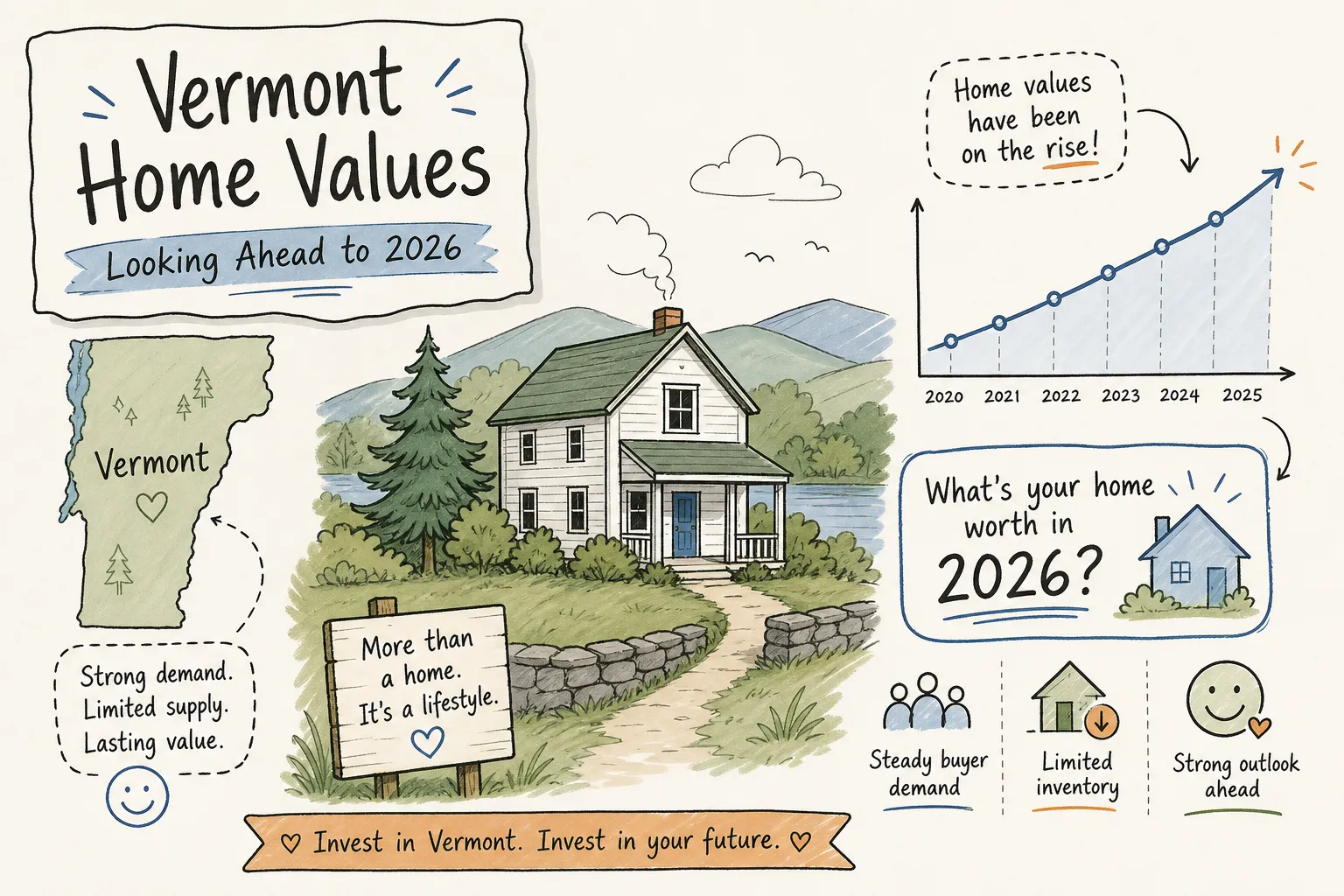
Vermont's median home sale price has climbed to roughly $438,000 in 2026, up approximately 75% from around $250,000 in 2019. That kind of sustained appreciation is notable for a small, rural state, and it makes home pricing in Vermont genuinely high-stakes for anyone thinking about selling. Getting the number right means the difference between a competitive listing that closes quickly and an overpriced home that sits, collects price reductions, and loses buyer confidence.
Vermont's market also behaves differently from the national picture. Tight inventory, sharp regional price swings, and seasonal patterns can move a home's value by tens of thousands of dollars depending on timing and location alone, county medians range from roughly $349,000 in Rutland County to over $570,000 in Chittenden County, and lakefront or resort-adjacent properties can swing further still. This guide walks you through exactly what determines your home's value right now: statewide data, regional breakdowns, key market forces, and a practical path to setting the right number.
Where Vermont home prices stand in 2026
The clearest statewide figure available is a median sale price of $438,280 in August 2026, up 0.8% year over year according to Redfin data. Vermont Housing Finance Agency data places the August 2026 median closer to $450,000. These numbers tell a specific story: prices are still rising, but the pace has slowed sharply from the aggressive gains earlier in the decade. That's a signal of stabilization, not weakness.
For context, Vermont's median sale price was around $250,000 in 2019, a roughly 75% increase over seven years. That gap matters for sellers assessing their equity position and for buyers trying to understand whether today's prices reflect a new normal. Current indicators suggest stabilization rather than a speculative bubble, and the underlying drivers, persistent housing scarcity, continued in-migration demand, and a state that builds very little new inventory, remain intact.
Supporting market indicators reinforce that picture of a market that's cooling but not collapsing. Vermont had roughly 3,869 active listings statewide in August 2026, representing approximately five months of supply, which is near the six-month threshold commonly used to define a balanced market. Homes averaged 69 to 95 days on market depending on region. At close to five months of supply, conditions lean slightly toward buyers, which means sellers can't ignore pricing precision the way they could in 2021 and 2022. Realistic pricing from day one matters more now than it has in years.
Home pricing Vermont: county and city breakdowns
Chittenden County is the clear outlier in Vermont's pricing landscape. The county's median sale price ran between $561,000 and $577,000 in 2026, and Burlington's median listing price reached $542,450. Burlington also carries a price-per-square-foot figure of $369, the highest in the state based on available data. The reasons are straightforward: density, employment concentration, walkable neighborhoods, and proximity to Lake Champlain all push values well above the state average.
Mid-state and rural counties tell a different story. Washington County, home to Montpelier, came in around $410,000 median. Lamoille County, which includes ski-adjacent communities, sits near $530,000, reflecting the premium that resort proximity commands. Rutland County offers the most accessible entry point in the Vermont housing market at roughly $349,000. These ranges reflect the state's genuine geographic diversity and don't follow a simple urban-to-rural ladder, ski markets and lakefront communities regularly exceed suburban prices even without urban amenities nearby.
Price per square foot in Vermont is not a reliable stand-alone metric, and understanding why matters before you pull comps. Lot size, structure age, well and septic systems, road access, and heating systems all distort per-square-foot comparisons here far more than they would in a suburban New Jersey or Boston-area market. A home with a drilled well, a three-bedroom septic permit, and gravel road access operates in a fundamentally different segment than a walkable Williston colonial with town water, even if both show similar square footage on paper.
The forces pushing Vermont property values up, and holding them steady
Mortgage rates are the most immediate pressure on Vermont's market right now. According to Freddie Mac, the 30-year fixed rate averaged 7.03% to 7.10% in late September 2026, up from 6.30% a year earlier. That shift directly reduces purchasing power: a buyer who qualified for a $400,000 home at 6.30% can afford meaningfully less at 7.10%, which affects how aggressively sellers can price and how long listings sit before offers arrive. Sellers who ignore this reality and price for the 2022 buyer pool are setting themselves up for stagnation.
In-migration from higher-cost metro areas has kept Vermont property values structurally elevated well above pre-pandemic levels, even as financing costs rose. Buyers relocating from Boston, New York, and the mid-Atlantic corridor have driven demand that local incomes alone would never support. This trend hasn't reversed, but it has slowed enough to shift some negotiating leverage back toward buyers, particularly for homes priced above $600,000.
Resort corridors and lakefront communities continue to attract second-home buyers, supporting prices in areas that wouldn't otherwise command a premium on local income alone. This demand pattern is especially important when pricing rural or recreational properties, where a comp-based analysis using only primary-residence sales can undervalue a home that appeals to a broader, higher-income buyer pool. Understanding who your buyer actually is shapes what your home is worth to them.
Pricing a home in Vermont: how seasons and geography shape value
Vermont's real estate market has a pronounced spring surge, typically running from late March through June, when buyer activity peaks and competing offers are most common. Fall brings a secondary wave, particularly for buyers wanting to close before winter sets in. Pricing a home in January or February means competing for a smaller buyer pool, which usually requires a more conservative list price to generate showings. Sellers who can time their listing to the spring window often net more, and understanding this cycle is one of the most underused pricing advantages available.
The distinction between rural Vermont and suburban Vermont runs deeper than geography. Automated estimates built on high-transaction suburban data struggle in rural environments, where the universe of valid comps is much smaller and far less frequently traded. Rural properties require more targeted marketing and more careful comp selection, and features like shared driveway easements, drilled wells, and septic capacity have an outsized influence on both value and buyer pool size.
Properties near ski resorts or on named lakes carry premiums that defy standard price-per-square-foot logic entirely. A camp on Lake Champlain or a chalet near Stowe or Sugarbush draws from a buyer pool with different motivations and different financial capacity than a year-round primary-residence buyer. These categories require a specialist's pricing eye, not a general market average, the variables that drive value, access to ski terrain, lake frontage, and dock permits, are largely invisible to algorithmic tools.
Using comparable sales to set a price that actually works
Because Vermont's housing inventory is limited and turnover is relatively low, valid comps can be genuinely hard to find. A true comparable sale needs to be recent (ideally within six months), geographically close, and similar in size, condition, lot characteristics, and utility systems. In Vermont, a 10-mile radius can span multiple micro-markets with very different buyer pools, so comp selection requires informed judgment, not just database filters pulled from the MLS.
Adjustments for condition, road access, outbuildings, acreage, and heating systems are critical in Vermont and are frequently mispriced by sellers relying on automated online estimates. A finished basement in a Burlington suburb adds value differently than the same space in a Northeast Kingdom camp. A wood pellet boiler is a selling point in some markets and a negotiating liability in others. Getting these adjustments right is where professional experience pays for itself.
The decision of where to position your price relative to comps should be deliberate. Price above the comp range only when you have a concrete, demonstrable differentiator, a full renovation, a rare lake view, superior lot size. Price at the comp range to attract maximum buyer attention in a reasonable timeframe. Price slightly below market when speed matters more than maximum proceeds, or when condition issues make aggressive pricing a clear liability. Each of these is a legitimate strategy; the mistake is defaulting to the highest number without a reason to support it.
How to get a professional pricing opinion before you list
A real comparative market analysis does more than pull an automated estimate. It accounts for active competition, recently expired listings (which reveal price ceilings the market already rejected), local buyer demand patterns, and the specific features of your home that algorithmic tools simply can't assess. For Vermont sellers, this nuance directly affects how much money ends up at the closing table. Mispricing a home, high or low, can mean substantial lost proceeds or weeks of wasted market time that erodes buyer confidence.
At Chad Dion Real Estate, every property is evaluated with hands-on experience pricing homes across Vermont's varied markets. The firm's owner-led approach means no handoffs to junior agents and no zip-code algorithms making the call, pricing decisions are grounded in real transaction data and firsthand knowledge of Vermont's micro-markets, built through direct experience as both a real estate professional and an active Vermont landlord.
Chad Dion Real Estate offers a free home valuation for Vermont homeowners considering a sale. Start with a direct conversation about your property and goals, followed by a thorough review of comparable sales in your specific market, and you'll come away with a pricing recommendation you can actually use. Whether you're planning to list in 30 days or 18 months, getting an accurate number now gives you a foundation for every decision that follows. Reach out directly to get started.
Price with precision, not optimism
Home pricing in Vermont in 2026 is not a one-size-fits-all exercise. Statewide medians give you a starting point, but county, town, season, property type, and current competition all shape what your home is actually worth to a buyer writing a check today. A $438,000 statewide median tells you very little about your specific property on your specific street in your specific town.
Sellers who consistently net the most aren't the ones who start high and negotiate down, they're the ones who understand their regional market, rely on real comps instead of automated estimates that were never built for Vermont's thin and varied inventory, and time their listing with Vermont's seasonal cycle in mind when they have the flexibility to do so. Precision beats optimism every time the market has room to push back.
If you want to know what your Vermont home is actually worth right now, Chad Dion Real Estate offers a free valuation grounded in real local data. Reach out to get a clear, honest number, and the context to know exactly what to do with it. Whether you're in Chittenden County or a quieter rural market, pricing with confidence starts with an accurate picture of where you actually stand.



Connect